VENTICAST™ · Application Booklet

Application Guide

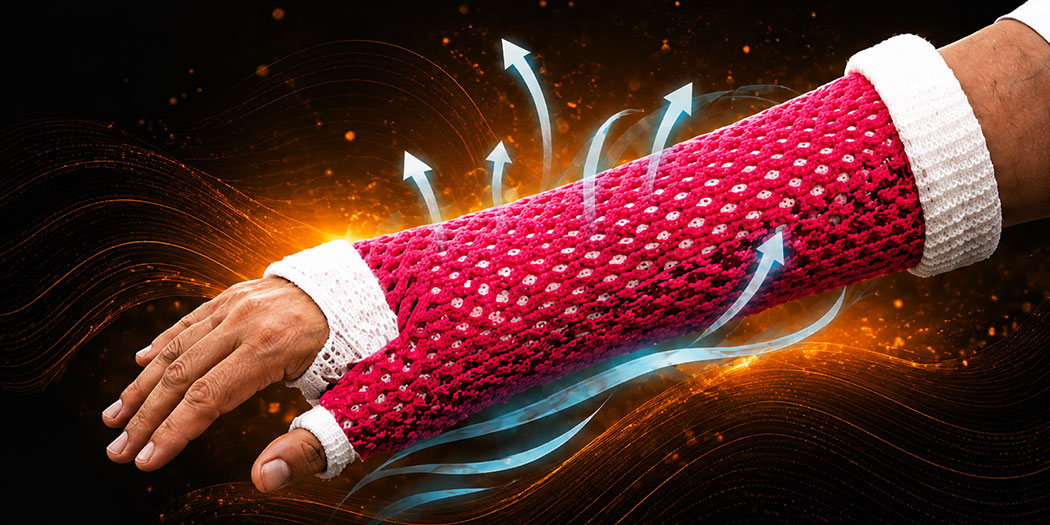
Step-by-step video guide for the next generation of breathable, ventilated casting. Follow each step and watch the matching video, no QR scanning needed.
VENTICAST application guide

Kit Contents & Sizing

VENTICAST comes as a complete kit: one double-layered, ultra-soft, breathable skin protector/stockinette, and one cylindrical mesh structure casting sleeve in a sealed pouch.

Cast Code / NameDiameter (width)*Length**Suggested Application Areas
3147.5 cm35 cmBelow-Elbow Adult · Below-Knee Adolescent Age Group
3227.5 cm55 cmAbove-Elbow Adult · Below-Knee Adult (Normal)
42210 cm55 cmBelow-Knee Extra-large (Obese Patient)
43510 cm90 cmAbove-Knee Adult (All)
2145 cm35 cmPaediatric Below-Elbow***
2245 cm60 cmPaediatric Above-Elbow*** · Below-Knee*** · Above-Knee***

* The mesh structure allows VENTICAST to expand up to 30% more. ** If the limb is short, extra length can be cut with a normal scissor before applying. *** Paediatric sizes are best suited for children under 5 years.

Step-by-Step Application Guide

Follow these 9 steps in order. Tap a step to expand it and watch the matching video.

1
Select the Appropriate VENTICAST Size
▾
VENTICAST (Cylindrical Mesh Structure Casting Sleeve) comes in different lengths and diameters. Selecting the right size depends on the length and circumference of the limb/body part, doctor's clinical judgment, and patient anatomy.
Note: The size is printed on the white sticker on the back of the box — product code, diameter/width, length, and suggested application area.
How to choose the correct size
2
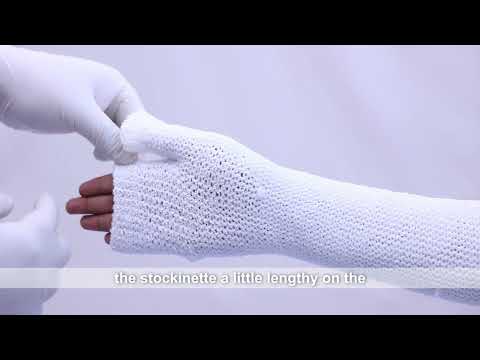
Apply the Skin Protector / Stockinette
▾
1. Put on the gloves.
2. Roll the skin protector stockinette into a doughnut-shaped roll.
3. Position and unroll the stockinette over the required body part.
Tip: For below-elbow/above-elbow applications involving the thumb, follow the dedicated thumb-placement technique shown in the relevant application video.
How to apply the stockinette
3
Open the Sleeve & Adjust the Length
▾
Open the sealed pouch containing the VENTICAST cylindrical sleeve. Measure the length of the cast against the body part — if the limb is short, extra length can be cut with a normal scissor before applying.
How to adjust the length
4
Make a Perfect Doughnut-Shape Roll
▾
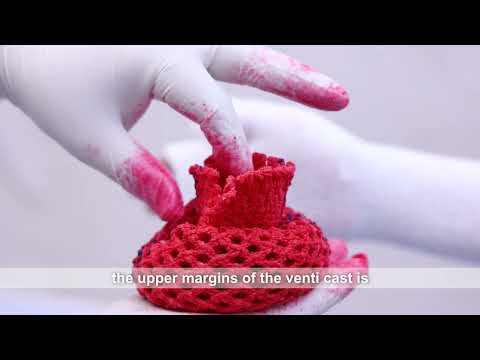
Slightly stretch the VENTICAST sleeve in width (diameter), then roll/revert the casting material into a doughnut-shaped roll. This step matters — a good doughnut roll gives the best premium finish.
How to make the doughnut shape
5
Water Activation
▾
Dip the doughnut-shaped roll in water for 3–4 seconds only. After water activation, stretch the casting doughnut slightly so it glides easily onto the body part.
When to expose VENTICAST to water
6
Hold, Apply & Unroll onto the Body Part
▾
Ask the assistant to hold the front end/tip of the stockinette securely to prevent slipping. Push/glide the water-activated doughnut onto the body part gently, leaving 1–2 inches extra stockinette at the start, then unroll it slowly.
Preventing stockinette from slipping
7
Contour & Remove Wrinkles
▾
While unrolling the cast, contour the edges and cast through your hands (wearing gloves). You have roughly 2 minutes before it starts getting hard — keep contouring and remove any wrinkles to achieve the desired anatomical fit.
How to contour properly
8
Fold Stockinette Edges for a Premium Finish
▾
For coloured VENTICAST, use two pairs of gloves at the start to avoid colour stains on the stockinette. After applying the cast, remove the first (stained) pair, then use the new gloves to fold the stockinette from both ends.
Avoiding stockinette staining
9
Setting Time & Weight Bearing
▾
After dipping (3–4 sec), you get 2–3 minutes for unrolling and contouring. After 3 minutes the stickiness fades but there's still time for closed reduction if required. After 60 minutes the cast is fully set.
Note: For below-knee and above-knee applications, weight bearing should only begin after 1 hour.
Setting time details — video pending

Applying VENTICAST on Different Body Parts

The technique varies by anatomical site. Pick a body part below to watch its specific application video.

Below-elbow casting with a dedicated thumb-opening technique — allows full thumb mobility while immobilizing the wrist and forearm.
How to create thumb opening
Below-elbow scaphoid casting technique for scaphoid fractures, immobilizing the thumb along with the wrist.
How to apply scaphoid cast
Above-elbow casting technique for humeral and elbow-region fractures requiring full arm immobilization.
How to apply above-elbow cast
Below-knee casting technique for lower leg and ankle fractures.
How to apply below-knee cast
Above-knee casting technique for femoral and knee-region injuries requiring full leg immobilization.
How to apply above-knee cast

Removing / Cutting VENTICAST

VENTICAST can be cut with a normal plaster cutter — the stockinette will not get cut. Unfold/remove the folded edge of the stockinette and use the normal plaster cutter; the stockinette itself may then be cut through with normal scissors.
How to remove VENTICAST safely

Quick Application Flow

From application to recovery, to a brighter tomorrow.

1
Select Size
2
Open Kit
3
Roll Stockinette
4
Apply Stockinette
5
Roll Casting Material
6
Dip 3–4 Sec
7
Stretch
8
Apply
9
Contour
10
Evert Stockinette at Both Ends
11
Allow to Set

Watch the Full Application, Start to Finish

One complete walkthrough covering every step in this guide.

▶ Watch Full Video

Why Doctors Prefer VENTICAST™

Enhances Patient Satisfaction

Its breathable, lightweight structure minimizes irritation, reduces sweating, and allows better air circulation — leading to a more positive treatment journey.

Reduces Follow-Up Complaints

Significantly reduces issues like itching, odor, and skin maceration common with traditional casts, letting doctors focus on treatment outcomes.

Differentiates Clinical Practice

Positions your practice as modern and patient-centric — reflecting a commitment to advanced care and building stronger patient trust.

Combines Innovation with Practicality

Easy to apply, durable, and clinically effective — no compromise between innovation and day-to-day practicality.